A blank wall can become a bespoke feature in two very different ways: cover it with wallpaper, or print a design directly onto it. Both can transform a room. The best choice depends on the finish you want, the condition of your wall and how much flexibility you need later.
Here’s how the options compare, and what to consider before you choose.
The difference: a covering or a print
Wallpaper is a decorative material attached to the wall with adhesive. It comes in a wide range of patterns and finishes, from simple paper to textured or embossed designs. Installation involves cutting and hanging panels, with their joins carefully aligned.
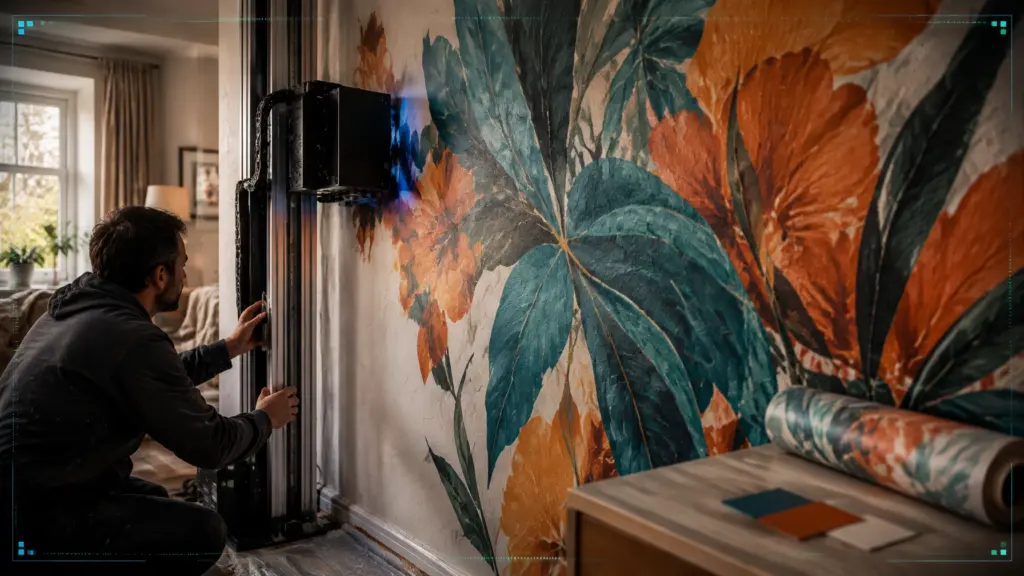
Direct-to-wall printing applies a digital design straight onto a suitable wall surface. A specialist printer moves across the wall to reproduce the artwork at the chosen scale. The result has no wallpaper panels or pattern joins interrupting the image. With Pixel Perfection’s process, UV-cured inks are ready immediately after printing.
In short: wallpaper adds a layer to the wall; wall printing puts the image on the wall itself.
At a glance: wall printing vs wallpaper
| What matters | Direct-to-wall printing | Wallpaper |
|---|---|---|
| Finish | Seamless custom image or design | Panels with joins |
| Design choice | Bespoke artwork, photography or graphics | Broad choice of patterns, colours and finishes |
| Surface | Can suit smooth or textured walls, subject to assessment and preparation | Usually works best on a smooth, even wall |
| Installation | Specialist printer and suitable access required | Can be professionally hung or, with the right product and skill, a DIY project |
| Texture | Retains the wall’s own texture; does not create a raised finish | Can offer embossed, flocked or other tactile finishes |
| Changing the look | Usually requires repainting or preparing to print again | Some products are designed to be strippable or peelable |
| Cost | Quoted for the wall, design and preparation | Depends on paper, quantity, preparation and hanging |
Choose wall printing for a bespoke, seamless feature
If you have a specific image in mind (a favourite photograph, an original mural or a design made to suit your room) direct printing gives you the freedom to work from your own artwork. The image can be scaled to the wall, rather than selected from a roll with a fixed width or pattern repeat.
There are no panel joins crossing a landscape or cutting through a large graphic. That makes printing a compelling option for a statement feature wall where you want the artwork to feel continuous from edge to edge.
It can also make sense if your wall has character you want to keep. Brick, timber and other textured surfaces can become part of the finished look, provided the surface is suitable and prepared correctly. The ink follows the surface rather than covering it with a separate paper layer.

Think about the overall effect. A colourful mural can turn an ordinary wall into the focal point of a room; a softer image can bring warmth without overwhelming the space. For more ideas, explore our guide to direct-to-wall printing for residential spaces.
Choose wallpaper for texture, flexibility or a traditional pattern
Wallpaper is a strong choice when the material itself is part of the design. If you want a raised, tactile or flocked surface, wallpaper offers finishes that a direct print, which applies colour rather than physical relief, does not.
It can also suit a room where you want a familiar repeating pattern, or a project where you’d like to choose from ready-made designs. Some wallpapers are intended to be removed or changed more easily than others. If reversibility matters, check the product’s removal instructions and ask how it may behave on your particular paint or wall surface. “Removable” does not guarantee that the surface underneath will be untouched.
Wallpaper does have joins between drops. A skilled installer can align them carefully, but they remain part of the finish. Pattern matching can also mean extra measuring and material, particularly when the design has a large repeat.

Check the wall before deciding
Neither finish can compensate for an underlying wall problem. Before either is installed, the surface should be sound, clean and dry. Loose paint, crumbling plaster or damp needs attention first.
Wallpaper generally calls for a smooth, even surface: bumps or texture may show through, and unevenness can make it harder to achieve a neat finish. Wall printing can work on more varied surfaces, including certain textured walls, but the result still depends on the condition and preparation of the substrate. A porous, glossy, dusty or damaged wall may need appropriate treatment before printing.
If you are considering printing on brick, plaster, painted walls, wood, glass or another surface, have its suitability assessed rather than assuming every wall is ready to print. The image will follow the wall, so its texture and imperfections can affect the final appearance.
Compare the whole project, not just the material
There is no universal price winner. Wallpaper costs depend on the product, the amount needed, any pattern-matching waste, wall preparation and installation. Printing is quoted around the specific wall and job, including its dimensions, surface and artwork requirements.
For a small, smooth wall and a standard pattern, wallpaper may be a practical option. For a bespoke, seamless mural or a textured feature wall, direct printing may better fit the brief. Ask for an itemised quotation for either method so you can compare preparation and installation as well as the visible finish.
Also consider the process in your home. Wallpaper involves cutting and applying adhesive, then allowing time for the work to be completed. Direct-to-wall printing uses specialist equipment that needs suitable access to the wall. Its UV-cured ink is ready immediately, but furniture, wall features and room layout may affect the setup. Confirm what needs to be moved and what access is required before booking.
Think about maintenance, and what happens later
A printed wall has no paper seams or adhesive edges. Pixel Perfection’s UV-cured finish is designed to be durable and washable, with the right care depending on the wall and installation. Ask for cleaning guidance specific to your chosen surface.
Wallpaper care varies by product. Some finishes can be wiped gently; others are more delicate. Check the manufacturer’s cleaning instructions, especially if you’re choosing a design for a busy room.
The two options also differ when you want a change. Wallpaper may be strippable, depending on its type and how it was installed. A direct-to-wall print is not a peel-off covering: changing it usually means repainting or preparing the surface for a new design. If you are deciding between them, think about how long you want the look to last and how you might refresh the room in future.
A quick way to choose
Consider direct-to-wall printing if you want:
- A bespoke mural, photograph or original design.
- A continuous image without wallpaper panel joins.
- A finish that works with the character of a suitable textured wall.
- Ink cured immediately after printing.
Consider wallpaper if you want:
- A tactile or embossed finish.
- A ready-made repeat pattern or established paper design.
- A DIY-friendly option or a product specifically suited to future removal.
- A decorative layer that can be stripped or replaced, subject to the product and wall underneath.

The better choice is the one that fits your wall
Wallpaper and wall printing can both make a room feel considered and personal. Wallpaper gives you a huge range of patterns and tactile finishes. Direct printing makes a bespoke image part of the wall, without panel joins, and can bring a textured surface into the design.
Start with the wall, the image you want and how permanent you need the result to be. If you’re exploring a custom print for your home, take a look at Pixel Perfection’s wall-printing service or get in touch to discuss your idea.