
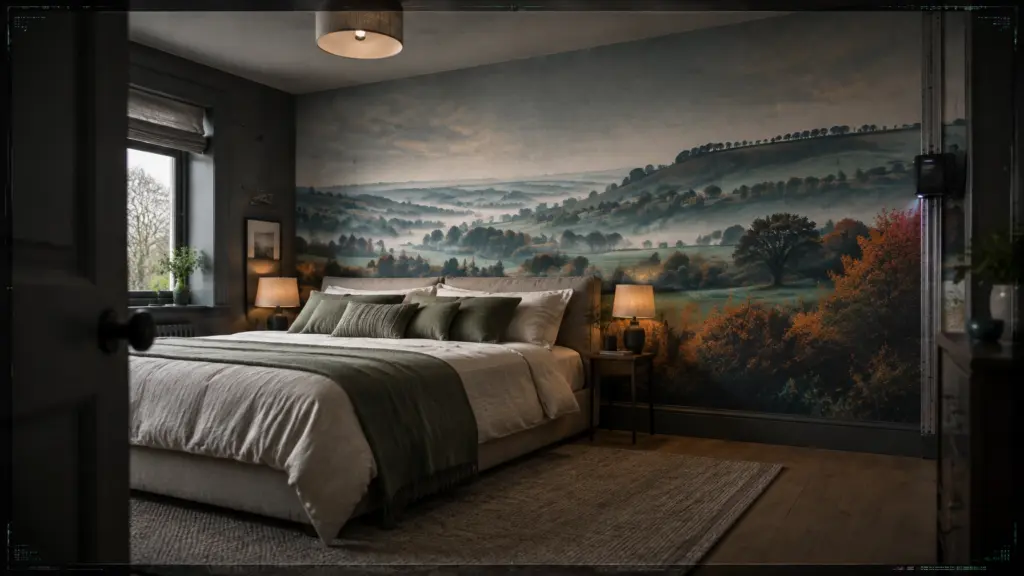
A bedroom mural can do more than add colour. It can set the mood, draw the room together and turn a plain wall into a feature made for your space.
The key is choosing an image that suits the room, then scaling and positioning it with the furniture in mind. From calming nature scenes to bold abstract designs, here are 12 ideas to help you picture the possibilities.
1. A misty forest for a softer retreat
Create a quiet, cocooning feel with a woodland scene in muted greens, soft grey and gentle haze. Tall trees draw the eye upwards, while layers of mist add a sense of depth without making the wall feel busy.
This works especially well behind the headboard. Keep the bedding and nearby accessories relatively simple so the mural can set the tone.
2. A mountain lake panorama
A wide landscape can bring a feeling of openness to a bedroom. Try distant mountain forms, still water and a soft blue-grey palette for a scene that feels spacious without overwhelming the room.
Consider this idea for the wall behind your bed or opposite it. Before settling on the composition, check what you’ll see from the doorway and from your pillow.

3. Oversized botanical leaves
Give familiar foliage a more distinctive look by scaling it up. Large fern fronds, palm leaves or magnolia shapes can bring colour and movement to a feature wall without the small, repeating pattern of conventional wallpaper.
Choose soft sage and cream for a restrained finish, or deeper greens and teal for stronger contrast. A bespoke mural can be scaled to suit your wall, so the leaves can be positioned around the bed rather than simply repeated across the surface.
4. A climbing garden
Imagine trailing vines and loosely painted flowers in dusty pink, sage, cream and warm grey. A climbing garden can soften the geometry of a room and add a romantic touch without needing a bright floral print.
Place the main details above the headboard and let quieter foliage fill the edges. Pair it with plain bedding, or pick out just one colour from the mural in a cushion or throw.

5. Tonal branches for a calm, minimal look
For a more understated feature wall, use branches, leaves or grasses in a close range of warm neutrals. Sand, taupe, cream and soft brown add visual texture while keeping the overall effect calm.
This approach works well with natural wood, linen and simple furniture. Use generous open areas in the design so the mural has room to breathe.
6. A cloud-and-sky wash
A softly blended sky mural can make the wall feel light and expansive. Pale blue, warm white and a little grey create a gentle effect; a subtle sunrise tint can add warmth.
Keep the forms diffuse rather than sharply defined if you want the room to feel restful. As with any colour choice, personal preference matters: the Sleep Foundation notes that responses to bedroom colours vary, so choose a palette that feels comfortable to you.
7. A quiet coastal scene
Bring a favourite kind of view indoors with a calm shoreline, open sea or hazy horizon. Muted blue-green, sand and cream create a natural palette that sits comfortably alongside neutral furniture.
A distant horizon can be effective behind the bed or on the wall opposite it. If you choose a photographic image, make sure it has enough resolution to look clear when enlarged to wall size.
8. An atmospheric ombré
An ombré mural moves gradually from one tone to another, for example, deep sage near the bottom fading to a lighter shade above. It offers a sense of depth without introducing a detailed scene.
Use a transition that complements the room’s existing colours. This can be a good choice if you want a distinctive feature wall but prefer a more minimal look.
9. Fluid ink or marble forms
Broad, flowing shapes can give a bedroom movement while keeping the design abstract. Try misty blue-grey with cream, or sage with pale stone, for a softer palette.
Keep the number of colours focused so the mural works with your existing furnishings. If the bedding is already patterned, a simpler composition may help the room feel more balanced.
10. Oversized geometric arcs
Large arcs, circles or angular blocks can create a confident contemporary feature. Try clay, ochre and warm brown against a pale background, or use a charcoal curve to add definition.
The scale is what makes this approach feel like a mural rather than a small repeat. Choose a few large forms and allow plenty of negative space around them.

11. A hand-painted-style landscape
For a more imaginative finish, choose a scene with the character of a painted illustration: a woodland path, distant hills or a stylised countryside view. A gently softened image feels more personal than a literal photographic panorama.
This is a chance to shape the scene around your room. You might echo the colours of a favourite place, or select details that create a particular mood without copying a photograph exactly.
12. A framed mural panel
A mural does not have to cover an entire wall. A defined panel above the bed, inside picture-frame moulding or within an alcove can make the artwork feel deliberately composed.
This option can be especially useful when the wall has switches, doors or other features to work around. The design can be scaled to the available area rather than forcing a full-wall layout.
Plan the mural around your bedroom
Start with the bed and sightlines
The wall behind the headboard is a natural focal point, but it isn’t the only option. If a window, doorway or chimney breast interrupts the wall, centre the composition on the bed or the usable section of wall. Consider what will be visible from the doorway and when you’re lying down.
Keep important details in view
The bed and pillows may cover the lower part of the mural. Position key features, such as a horizon, focal tree or main shape, where they won’t disappear behind the headboard. A digital proof can help you preview the artwork at the right scale before printing.
Check colours in your own light
A design can look different in daylight and under evening lamps. Look at your chosen colours alongside the bedding, flooring and furniture, and consider how light falls on the wall throughout the day. The right palette is the one you’ll enjoy in your room.
Prepare the wall and artwork
A successful mural starts with a sound surface and a suitable design file. Share the wall dimensions, photographs of the space and your preferred image or ideas with your printer. A professional can check the surface and scale the artwork to fit.
With direct-to-wall printing, the image is printed onto the wall rather than applied as wallpaper panels. That means no wallpaper seams interrupting the design. Pixel Perfection provides bespoke residential wall printing across West Sussex and Sussex, using instant-curing UV inks. The team can assess your wall and advise on preparation before print day.
Turn your bedroom idea into a feature wall
Whether you picture a hazy landscape, oversized foliage or an abstract colour wash, the best mural is the one designed for your room. Consider the mood you want, the wall you’ll use and how the artwork will sit with your furniture.
Explore custom wall printing or get in touch to discuss your bedroom wall, share an idea and find out what’s possible.