A striking feature wall should feel at home in your space, not leave you wondering what was used to create it. That is why ink matters.
Pixel Perfection uses odourless, non-toxic inks intended for indoor environments. Our direct-to-wall printing process applies artwork straight onto a suitable wall, then cures the print instantly with UV light. There is no wallpaper paste, vinyl layer or long drying period.
But “non-toxic” is not a magic label that answers every safety question. The ink’s formulation, how it is handled during printing and how it is cured all matter. Here is a clear guide to what the terms mean, what to consider and how we approach wall printing for homes and commercial interiors across Sussex.
What does “non-toxic ink” mean?
“Non-toxic” is often used to describe an ink designed for its intended use without harmful effects under expected conditions. It should not be taken to mean that every ingredient is harmless in every situation, or that uncured ink can be handled without care.
A printed, cured surface is different from liquid ink inside printing equipment. Some components used in UV-curable inks can require careful handling before curing. The UK Health and Safety Executive (HSE) highlights the importance of controlling exposure to UV-curable inks, including preventing skin contact with uncured materials. Read the HSE’s guidance on UV-curable inks.
For you, the practical distinction is simple: ask about both the finished wall and the printing process. A reputable provider should be able to explain what ink system they use and how it is handled.
How UV-cured wall printing works
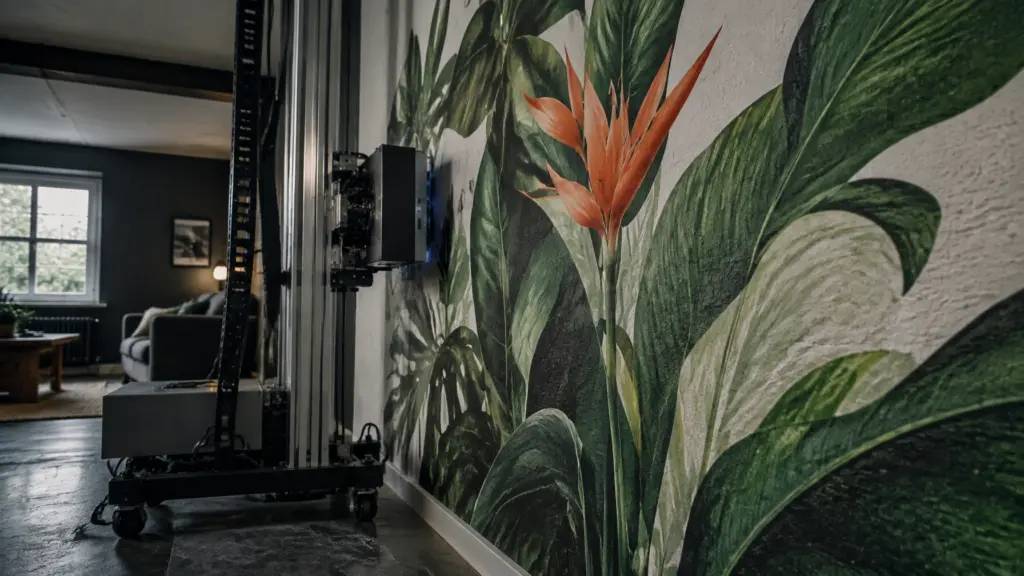
Our printer lays down the design directly onto the wall. A UV light source then cures the ink as the print head moves, so the artwork is ready without the extended drying time associated with some other finishes.

UV curing is a process, not a blanket guarantee that every formulation has the same environmental or health characteristics. In particular, low odour does not automatically mean zero emissions. The exact ink formulation and operating conditions matter. The US Environmental Protection Agency notes that VOC emissions and indoor-air impacts depend on the specific products and process used. See the EPA’s overview of VOCs and indoor air.
That is why we describe our inks as odourless and non-toxic for indoor use, while treating product information and responsible use as important parts of the service.
What makes direct-to-wall printing a considered choice?
No paste or separate vinyl layer
The image is printed directly onto a suitable surface, rather than being installed as wallpaper or a self-adhesive wrap. That means no wallpaper seams and no separate vinyl layer to apply. It also avoids the need for paste as part of the print installation.
Fast curing and a clear finish
The print cures as the machine works, so there is no lengthy print-drying period. This makes the process convenient for many homes and businesses, where getting the room back into use matters.
Bespoke artwork, scaled to your wall
Your image can be prepared to fit the wall’s dimensions, with composition and scale checked before printing. The result can move a room from blank to personal, or a commercial wall from plain to unmistakably yours.

What to expect on print day
A careful process starts well before the printer arrives.
1. Check the wall and the room. The surface should be suitable and in the right condition for printing. We consider the wall material, its texture and the room’s intended use.
2. Prepare the artwork. Your design is calibrated and scaled to the wall. This is the moment to confirm placement, dimensions and visual details.
3. Print with the right setup. The machine applies the design directly to the wall and cures the ink as it prints. The equipment is operated by a trained professional, not left for you to manage.
4. Review the finished result. Once printing is complete, the artwork is cured and the wall can be checked. Any project-specific care advice should be followed.
Printing indoors does not mean ventilation and safe working practices are irrelevant. HSE guidance for print workplaces discusses controls such as ventilation and handling procedures for UV-curable inks. These requirements depend on the product and equipment. See HSE guidance for printing with UV-curable inks.
Is wall printing suitable for bedrooms and children’s rooms?
The inks we use are intended for indoor environments, making direct-to-wall printing an option for many residential spaces, including bedrooms and living areas. The finished wall is not the same as a container of uncured ink; during the job, ink is handled as part of a professional printing process.
If you are planning work in a nursery, a child’s bedroom or a room used by someone with sensitivities, tell us before the project is booked. We can discuss the room, timing and any practical questions you have, so you can make an informed decision. Where a specific medical or allergy concern exists, seek advice from an appropriate health professional.
For other special uses, such as a surface that will contact food, toys or skin: indoor suitability alone is not enough. Ask the relevant manufacturer or supplier for information about that specific use.
A more thoughtful way to transform a wall
Eco-friendly decisions are not just about one material. They also involve how much extra material a finish adds, how disruptive installation is and what happens when you want a new look.
Direct-to-wall printing avoids a wallpaper or vinyl layer and uses artwork prepared for the wall itself. It is a precise way to make a space distinctive without a conventional paste-and-panel installation. We do not claim that any printing method has no environmental impact; the right choice depends on your wall, design and priorities.
For a closer look at how direct printing compares with wallpaper, read our guide to direct-to-wall printing vs wallpaper. You can also explore residential wall printing ideas or our commercial wall graphics and murals.

Questions worth asking your wall-printing provider
Before approving a design, ask:
- What type of ink is used, and is it intended for indoor applications?
- What should I expect during printing, including any ventilation guidance?
- How is uncured ink handled during the job?
- Is my particular wall surface suitable?
- Are there any special considerations for this room or its occupants?
Clear answers help you understand the finished result and the process behind it. If a claim such as “non-toxic” or “eco-friendly” is important to your decision, ask what it means for the specific ink and application.
From blank wall to considered feature
A vivid mural can change the feel of a bedroom, bring character to a living room or create a distinctive branded backdrop for a business. With direct-to-wall printing, your design is scaled to the surface and printed without wallpaper seams or paste.
Pixel Perfection provides bespoke wall printing across West Sussex and Sussex, using an insured mobile setup and inks intended for indoor environments. If you have a room in mind, share your idea with us. We can discuss the wall, the artwork and the practical details before you decide what comes next.