A blank business wall can become a permanent brand feature, or a changeable campaign surface. The right finish depends on what the wall needs to do, how often your message changes, and what the surface is like.
Two popular options are direct-to-wall printing and printed vinyl wraps. Both can deliver bold, high-resolution graphics. But they work differently, and that affects appearance, installation, flexibility and long-term value.
At a glance: two different ways to transform a wall
Direct-to-wall printing applies UV-curable ink straight onto a prepared surface. There is no adhesive film or wallpaper-style panel. The design becomes part of the wall’s finish.
Vinyl wraps use printed self-adhesive film. The graphic is produced separately, then applied by hand to the wall. Large designs may be installed in several sections, with joins between panels.

| Direct-to-wall printing | Vinyl wraps | |
|---|---|---|
| How it works | Ink is printed directly onto the wall | Printed adhesive film is applied to the wall |
| Overall look | Seamless across the printed area | Panel joins or edges may be visible |
| Best suited to | Long-term murals and branding | Changeable campaigns and graphics |
| Surface considerations | Can suit selected smooth or textured surfaces, subject to assessment | Usually performs best on clean, smooth surfaces; specialist films may suit some textures |
| Changing the design | Usually requires repainting or covering the print | Film can generally be removed or replaced, though paint may be affected |
Neither option is best for every business. The practical choice starts with your wall and your plans for the space.
Choose direct-to-wall printing for a seamless, lasting feature
When you want a mural, brand image or custom artwork to feel integrated with your interior, direct-to-wall printing offers a clean, continuous finish. With no vinyl sheet or adhesive layer, there are no film edges to catch or panel joins to interrupt the design.
That makes it a strong option for permanent features in reception areas, offices, hospitality spaces and retail interiors. Imagine a bold reception wall that introduces your brand as soon as visitors arrive, or a bespoke image that gives a café or restaurant its own atmosphere.
The process also opens up more possibilities for characterful surfaces. Depending on the wall’s condition and suitability, direct printing can work on surfaces such as painted walls, brick and wood. Rather than covering the wall with a separate material, the print sits directly on the prepared surface.

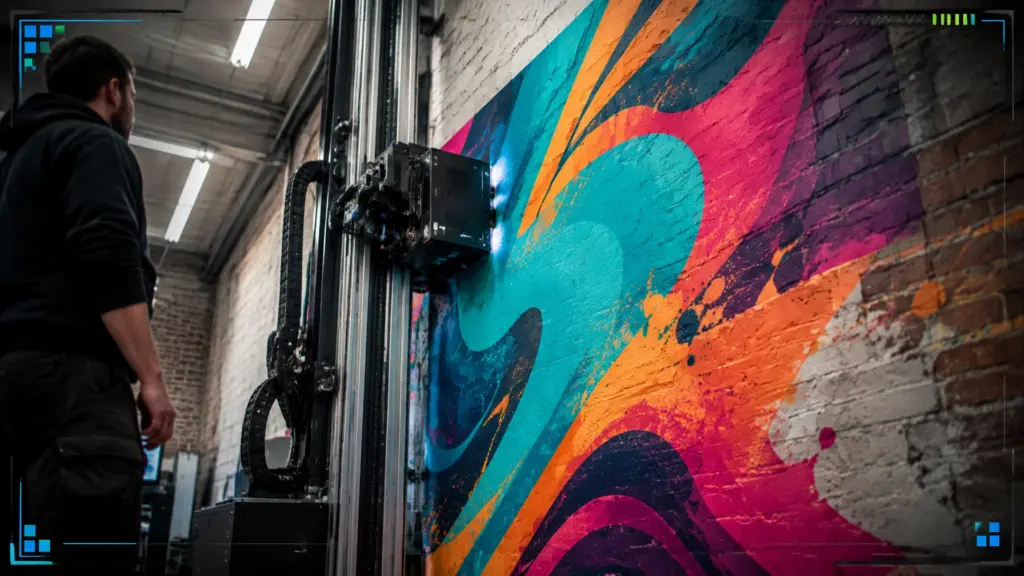
At Pixel Perfection, our mobile printing equipment applies high-resolution artwork directly to suitable surfaces. The UV-cured inks dry instantly, and our inks are odourless and non-toxic for indoor environments. You get a bespoke finish without wallpaper seams, paste or adhesive vinyl.
Consider direct-to-wall printing when:
- The artwork or branding is intended to stay in place.
- You want a large, continuous image without vinyl panel joins.
- The wall’s texture is part of the design.
- A high-impact brand feature will add value to the interior over time.
A direct print is not the most convenient choice if you expect to change the graphic regularly. It is also important to check the wall first: damp, loose or flaking surfaces need attention before any finish is applied.
Choose vinyl when flexibility comes first
Vinyl is useful when your business needs graphics that can be changed as campaigns, seasons or brand messages evolve. A printed wrap can suit a temporary promotion, event, pop-up or leased space where a more removable treatment is preferable.
It can also be practical for smaller graphics, logos and messages on smooth walls or glass. The material is printed off-site, then installed by hand, so it can work where a wall-mounted printing machine would not have suitable access.

There are trade-offs. Larger wraps may need several panels, which means careful measurement and alignment. Joins and edges can be noticeable, and bubbles or lifting can occur if the wall, adhesive or installation are not suitable. Textured or unstable walls can make adhesion more challenging, so the material and surface should be checked before committing.
Removability is a useful advantage, but it is not a guarantee of damage-free removal. Weak paint or a poorly prepared surface can come away with the film. Ask your installer what removal is likely to involve on your specific wall.
Consider vinyl when:
- The design is temporary or likely to change.
- You are planning a seasonal promotion or short-term event.
- You need a graphic on glass or a smooth surface.
- Your priority is a removable graphic rather than a permanent wall feature.
For a closer look at how direct printing compares with another wall covering, read our guide to direct-to-wall printing vs wallpaper.
Compare the full project, not just the material
The cheapest-looking option on paper may not be the best value for your space. Compare the full job: wall preparation, artwork setup, installation, expected lifespan, cleaning needs and what happens when you want to change the design.
With vinyl, ask whether the quote includes printing, lamination if required, panel planning, installation and removal. With direct-to-wall printing, ask about site access, wall preparation, artwork scaling and any limitations caused by corners, fixtures or the surface itself.
For both methods, the condition of the wall matters. A clean, dry, stable surface gives the finished graphic a better foundation. A site assessment can also identify whether repairs or preparation are needed before installation. You can review general considerations in this interior wall graphics materials and installation guide.
A simple decision guide
Choose direct-to-wall printing when your goal is a distinctive, longer-term feature that feels built into the interior. It is particularly compelling for bespoke murals, brand walls and artwork on suitable textured surfaces.
Choose vinyl when the message needs to be removable or updated, or when you need a flexible graphic for a campaign, event or smooth surface.
If you are still weighing it up, ask yourself:
- How long should the design stay? A lasting brand feature points towards direct printing; a campaign that will change points towards vinyl.
- What is the wall made of, and what condition is it in? Confirm surface suitability before choosing a method.
- Will panel joins matter? For a single, uninterrupted mural, direct printing avoids vinyl panel joins.
- What does the quote include? Compare preparation, artwork handling and installation as well as the print itself.
You can also explore how we approach custom office wall graphics and murals for commercial spaces.
Make the wall work for your business
The best choice is the one that fits your surface, your brand and the lifespan you have in mind. Vinyl offers flexibility for graphics that may need to change. Direct-to-wall printing turns a suitable wall into a seamless, bespoke feature.
Pixel Perfection provides direct-to-wall printing across West Sussex and Sussex, with artwork prepared and scaled to suit your wall. Share your idea with us and we can help you explore what will work for your business.