
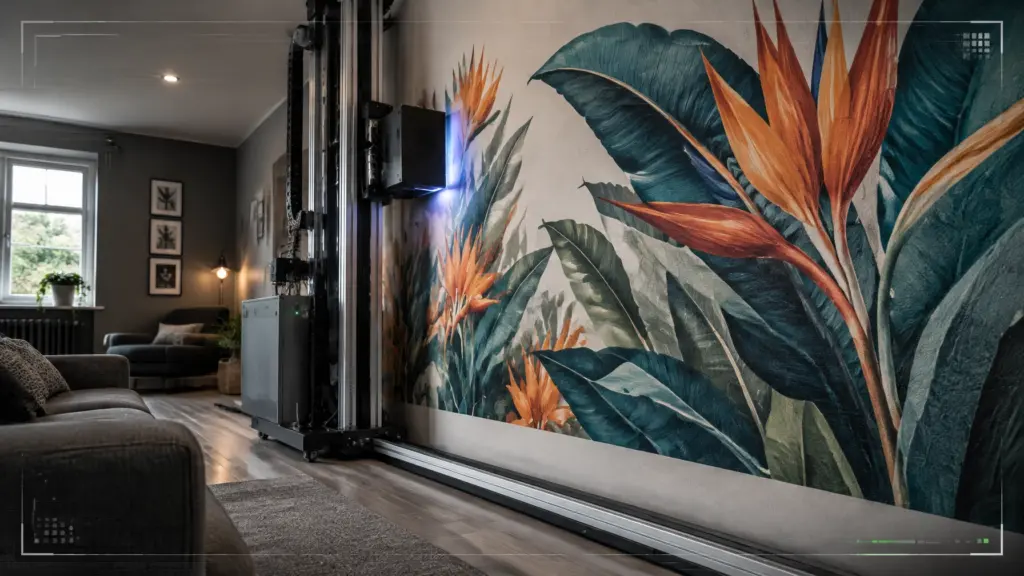
A wall mural can transform a blank surface into a feature you enjoy for years. But how long should you expect it to last?
The answer depends on the mural type, the condition of the wall and the environment around it. For a professionally prepared interior wall with a direct-to-wall UV print, around 10 years is a useful planning guide. Some manufacturers cite colour stability of up to 12 years indoors, depending on the surface, location and level of physical contact. These are indicative figures, not a universal guarantee.
Here’s what affects mural durability, and how to help your wall art stay looking its best.
The mural type makes a difference
“Wall mural” can mean several different things. A wallpaper mural is printed on panels and attached with adhesive. A vinyl graphic uses a separate film applied to the wall. Direct-to-wall printing places the artwork onto the wall surface itself.
Each has different wear points. Wallpaper seams or vinyl edges may lift over time. Direct printing has no panels, paste or adhesive edges, so those particular failure points are absent. The ink is cured on the wall during printing, creating a durable finish that preserves the character of the surface.
For a closer look at the differences, read our guide to direct-to-wall printing versus wallpaper.
How long does direct-to-wall printing last?
For an indoor direct-to-wall mural, it’s sensible to plan for about 10 years of attractive service, with the actual lifespan depending on the conditions. Manufacturer guidance varies: for example, wallPen’s FAQ states colour stability of up to 12 years indoors, depending on the surface, location and mechanical stress.
That figure is best understood as an indication, not a promise for every wall or room. A mural in a bedroom with little direct sunlight may face fewer challenges than one in a busy corridor. In a high-contact area, scuffs and impacts may affect the finish before the image noticeably fades.
It also helps to separate the life of the print from the condition of the wall beneath it. If plaster cracks, paint flakes or moisture affects the substrate, the print can be affected too.

Gentle, routine cleaning helps keep a printed wall looking fresh.
What affects how long a mural lasts?
1. Wall preparation and surface condition
A sound, clean surface gives a mural a better foundation. Dust, grease, flaking paint and unresolved damp can undermine the finish. Porous or textured walls may also need suitable preparation so the result is consistent across the surface.
This is why checking the wall matters before printing. Preparation is not simply a finishing touch: it helps the print perform as intended. If you have concerns about your wall, discuss its condition with your installer before settling on a design or date.
2. Sunlight and room conditions
Strong, direct sunlight can contribute to colour fading over time. A south-facing room or a wall beside large windows may receive more exposure than a shaded interior. Temperature changes and persistent humidity can also affect the wall itself, particularly if there is an existing moisture problem.
No mural finish should be treated as a solution to damp. Address the source of any moisture before printing. In bright rooms, consider how sunlight falls across the wall throughout the day when choosing its position.
3. Contact, knocks and cleaning
A mural behind a sofa or bed may receive little contact. A hallway, café or workplace corridor may be brushed, bumped or cleaned more frequently. That everyday wear can influence how the finish looks over time.
UV-cured prints are designed to be durable, but durable does not mean indestructible. Abrasive pads, hard scraping and harsh cleaning products can mark a surface. For busy commercial areas, ask your installer what level of protection and cleaning approach is appropriate for your specific wall and use.
4. The design and print file
Durability is about more than the ink. A high-resolution, correctly scaled design helps the mural look clear at full wall size from the start. Careful calibration to the wall dimensions also supports a precise, finished result.
Our digital file preparation and wall mural printing service helps align artwork with the dimensions and character of your space.

Checking the wall before printing helps identify surface issues that could affect the finished mural.
How to care for a printed wall mural
A little gentle care goes a long way. For routine dust, use a soft, dry microfibre cloth. If the wall needs more attention, use a lightly damp, soft cloth and mild soapy water. Wipe gently rather than scrubbing, and dry the area afterwards.
Avoid abrasive sponges, scouring pads, aggressive solvents and hard scraping. If you are considering a stronger cleaner or disinfectant, test it on a discreet area first and follow the installer’s advice.
For a commercial setting, it’s useful to agree on a cleaning routine that reflects the space. A reception wall, restaurant interior and quiet office may have different levels of contact and cleaning needs. If frequent wipe-downs are expected, mention this when planning the project so the finish can be suited to the application.
Room by room: what to consider
Bedrooms and living spaces: These are often lower-contact areas, making them well suited to bespoke artwork, photography or a statement feature wall. Think about direct sun and furniture placement when choosing the wall.
Hallways and games rooms: Walls in busy parts of the home may see more knocks and touching. Consider what will sit near the mural, how people move through the space and how it will be cleaned.
Offices, retail and hospitality: A mural can strengthen a brand or create a distinctive atmosphere, but high-traffic areas may need more frequent care. Plan around furniture, seating, cleaning routines and regular contact with the wall.

A well-planned mural can bring a vivid focal point to a commercial interior.
What happens if you want to change the mural?
A direct-to-wall mural is not a removable wallpaper panel, so changing the design involves treating the wall surface rather than peeling off a sheet. Depending on the wall and the existing finish, the surface may be prepared and repainted or otherwise made ready for a new design.
If you think you may want to refresh the space later, raise that during the planning stage. It’s easier to make informed choices when the wall condition, artwork and future plans are considered together.
The takeaway: plan for years, not just the reveal
A well-planned direct-to-wall mural can deliver a durable, seamless finish without wallpaper joins or adhesive edges. For an interior project, around 10 years is a practical planning estimate, while the final lifespan depends on the wall, sunlight, use and care. Some manufacturer guidance indicates colour stability of up to 12 years under suitable indoor conditions, but no single figure applies to every project.
The best place to start is the wall itself. Check its condition, consider how the room is used, and choose artwork that suits the space. Pixel Perfection provides bespoke direct-to-wall printing across West Sussex and Sussex, using instant-curing UV printing and non-toxic, odourless inks.
Have a wall in mind? Share your idea with Pixel Perfection and we can help you explore a design that fits your space.